Printable wallcovering is wide-format media engineered to be printed on a roll-to-roll printer and then installed on an interior wall, where it has to look like a finished architectural surface rather than a banner tacked up with grommets. For a print service provider, it sits in a different risk category than most substrates you run. A banner lives outside for a season. A wall graphic lives inside an occupied building, next to fire exits, under warranty, and in front of a client who will notice every seam and bubble. Choosing the wrong roll does not just cost a reprint, it can fail an inspection.
This guide is written for the print shops, sign companies, and environmental graphics teams who buy the media, not for the end customer. It covers what printable wallcovering actually is, the fire rating you have to read before anything else, the three material families you will quote from, and a sourcing checklist you can keep next to the press.
Key Takeaways
- Printable wallcovering is interior wall media built for wide-format printers and permanent or semi-permanent installation, held to building-code fire performance that outdoor banner stock is not.
- Fire rating comes first. Most commercial interior wall finishes must meet Class A under ASTM E84, which the American Wood Council defines as a flame spread index of 25 or less.
- There are three practical families to quote from: Type II PVC vinyl, PVC-free nonwoven, and premium wide-width material. Match the family to the room, the code, and the printer.
- Width drives labor. Media at 126 or 196 inches wide cuts the number of seams on a large wall, which is where install hours and callbacks hide.
- Sustainability questions are now standard on commercial bids. PVC-free, formaldehyde-free media with no phthalates, heavy metals, or PFA materials answers them without a conversation about trade-offs.
What is printable wallcovering?
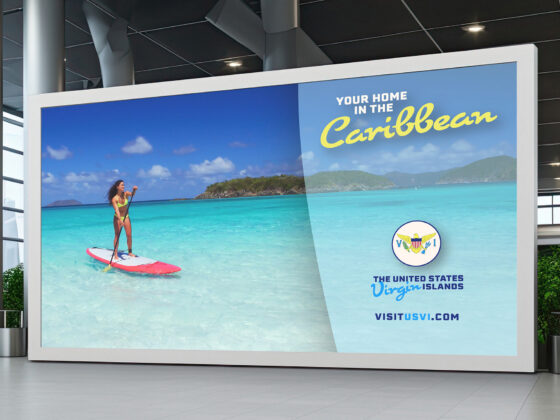
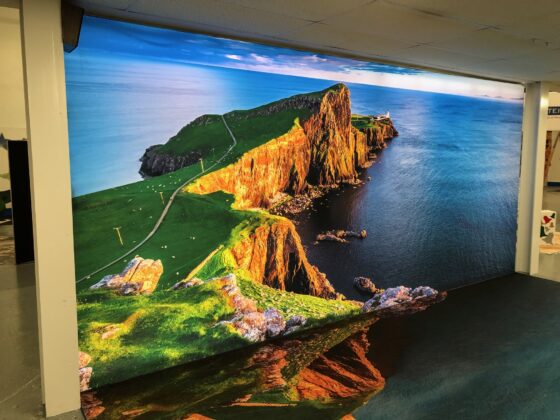
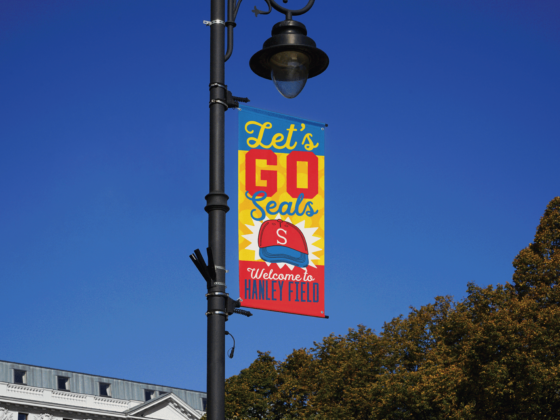
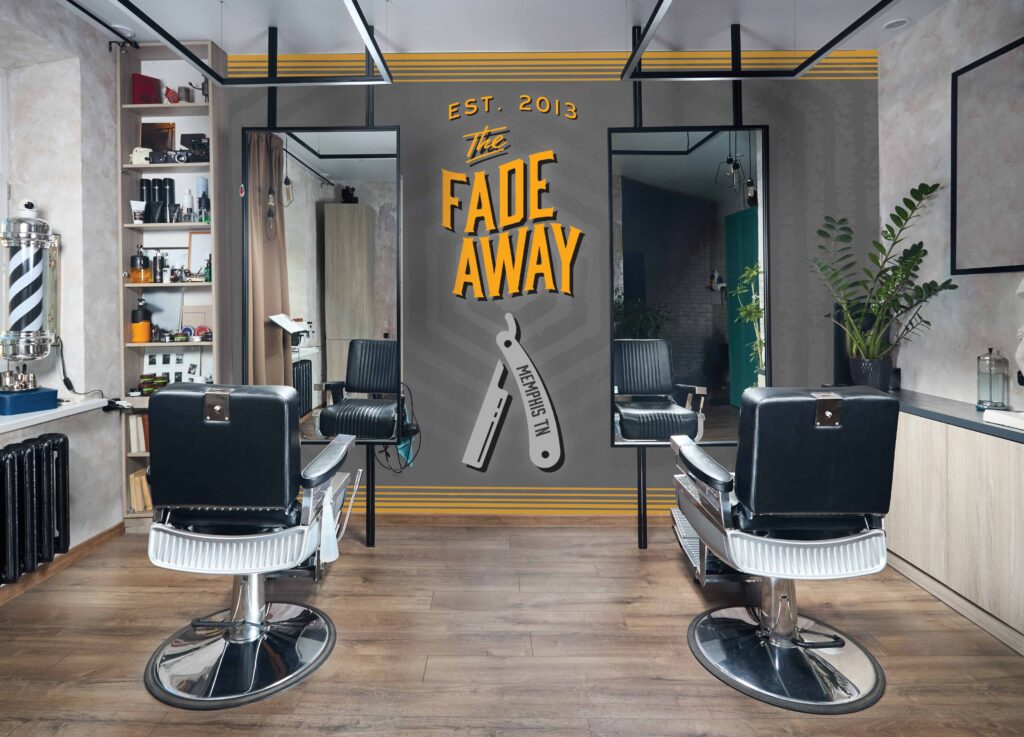
Printable wallcovering is a coated media, sold in rolls, that accepts wide-format ink and is finished as a wall surface rather than a hung graphic. The printable face carries a receptive coating tuned for solvent, eco-solvent, UV, or latex ink. The back is built to be installed with commercial-grade wallcovering adhesive, and in some products it can also be sewn or grommeted for upscale banner use. The category covers smooth vinyl, textured and embossed vinyl, and PVC-free nonwoven materials, and it is the backbone of custom murals, corporate lobby branding, retail environments, hospitality rooms, and wayfinding walls.
The distinction that matters on the floor is permanence and context. Soft signage and fabric displays can be swapped out between events. A printed wall is semi-permanent, judged against the painted and papered surfaces around it, and governed by the same interior finish rules as any other wall covering in that building. That is why the specification process starts with code, not color. If you are new to the category, the printable wallcovering media hub is the place to compare the full range in one view.
Why commercial interiors keep driving wallcovering demand
Nonresidential construction in the United States ran at a seasonally adjusted annual rate of 773.0 billion dollars in August 2026, according to the U.S. Census Bureau. Every one of those offices, clinics, hotels, schools, and retail fit-outs is a wall waiting for a finish, and printed graphics have become a default way for brands to differentiate interiors that would otherwise look identical.
For a print provider, that construction pipeline is the real market behind the keyword. Designers and facilities teams want branded murals, donor walls, patient-experience graphics, and retail storytelling, and they want them produced locally and quickly. The shop that can quote wallcovering with confidence, and prove the media meets code, wins work that a pure banner house cannot touch. The media you stock is what lets you say yes to an architect’s finish schedule instead of referring the job out.
How to read a wall media fire rating: ASTM E84 Class A
Fire performance is the first spec to confirm, before width, finish, or price. Interior wall and ceiling finishes in commercial buildings are classified by the ASTM E84 surface burning test, and most occupied spaces, corridors, and exits require Class A. The American Wood Council explains that Class A corresponds to a flame spread index of 25 or less, tested per ASTM E84 or UL 723, with a smoke-developed index limit of 450.
In practice, that means you cannot quote a wall graphic off a banner data sheet. The product has to publish its ASTM E84 result, and you need that documentation on file for the general contractor and the fire marshal. A material like Wallscapes EcoVantage Plus passes ASTM E84 with a Class A rating, which is exactly the line an inspector looks for. Pull the fire listing from the manufacturer’s technical data sheets and keep it with the job file. If a media supplier cannot produce the ASTM E84 classification, treat that as a disqualifier for interior work, not a detail to chase later.
The three printable wallcovering material families
There are three families you will realistically quote from, and the right answer depends on the room, the code, and the ink you run.
Type II PVC vinyl is the commercial workhorse. It is durable, scrubbable, and available with surface textures that read as real wallpaper. Wallscapes Plus is a commercial-grade Type II line offered in four embossment finishes, Bali Hai, Matte, Stardust, and Suede, in a standard 54-inch width, compatible with solvent, eco-solvent, UV, and latex printing. Embossed vinyl hides minor wall imperfections and gives a lobby or corridor a finished, tactile look that a flat film does not.
PVC-free nonwoven is the family that answers the sustainability and indoor-air questions now common on commercial and institutional bids. Wallscapes EcoVantage Plus is a heavy-weight nonwoven of cellulose and polyester with a printable coating, built to replace PVC and olefin-laminated products. It is formaldehyde-free and contains no phthalates, heavy metals, or PFA materials, and it still passes ASTM E84 Class A. For healthcare, education, and corporate clients with environmental procurement rules, this is often the only family that clears the specification.
Premium wide-width material is the choice when seams are the enemy. Wallscapes XL is a durable, flexible wallcovering with a blue back that sets a bright white point and a wide color gamut, available in 126-inch and 196-inch widths, and it can be installed with adhesive, sewn, or grommeted. On a tall feature wall, the wider roll is what turns a multi-panel install into a one- or two-drop job.
Width and seams: where wallcovering jobs win or lose margin
Width is the single spec most likely to decide whether a wall job is profitable, because seams are labor and labor is where the margin goes. A standard 54-inch material on a 16-foot wall forces four or more vertical drops, and every seam is a chance for misalignment, lifted edges, and a callback. Media at 126 or 196 inches, like Wallscapes XL, can cover the same wall in one or two drops, which cuts install time and the risk of a visible join through a logo or a photographic image.
Width and seams
Wider media, fewer drops on the same wall
Vertical drops needed to cover a 16-foot wall, by media width.
A 16-foot wall is 192 inches wide. Drop counts are the minimum by width, before any overlap or trim allowance.
Wider rolls also protect the design. A mural with a continuous gradient or a large brand mark looks amateur when a seam cuts through the focal point. Fewer seams mean the printed image, not the installation, is what the client sees. When you compare two media at similar cost per square foot, the wider roll is usually the cheaper job once you price the install hours honestly, so build width into the quote math rather than treating it as a nice-to-have.
Matching printable wallcovering to your printer
Confirm ink compatibility before you confirm anything else about color, because a material you cannot run is not an option regardless of how good it looks. The common printable wallcovering lines are built for solvent, eco-solvent, UV, and latex inks, which covers most wide-format shops, but you still verify it against your own press and profile rather than assuming.
Ink choice also shapes the finished wall. Latex and UV cure to a durable, low-odor film that suits occupied interiors where a solvent smell is a problem during install. Solvent and eco-solvent remain strong on vinyl for scrubbable, high-traffic surfaces. Whichever you run, pull the media onto your actual printer with your actual profile and proof it before you commit a full wall, because embossed and nonwoven surfaces take ink differently than the smooth banner stock your profiles were likely built on. Ordering a sample roll first is cheaper than discovering a profile problem on a 400-square-foot mural.
Sustainability and the compliance questions clients now ask
Sustainability is no longer a premium upsell on commercial interior work, it is a baseline question on the bid. In FESPA’s 2023 Print Census, which surveyed 1,778 printers and signmakers across more than 120 countries, 70 percent of respondents said they could address sustainability demands without raising their prices, and another 22 percent had already raised pricing with no impact on sales. The market has absorbed the shift, and your clients expect you to have an answer.
The environmental case for PVC-free media is concrete. The U.S. Environmental Protection Agency reports that plastics made up 12.2 percent of municipal solid waste generation in 2018 and over 18 percent of the material landfilled that year. For a specifier writing environmental requirements into a finish schedule, media that is PVC-free, formaldehyde-free, and free of phthalates, heavy metals, and PFA materials removes several line-item objections at once. Stocking at least one material that clears those rules, and being able to point to a supplier’s sustainability documentation, lets you bid institutional work you would otherwise have to pass on.
A six-point checklist for sourcing printable wallcovering
Use this list when you evaluate any new wallcovering media before you add it to your quoting catalog:
- Fire rating on paper. Confirm a published ASTM E84 Class A result and file the documentation. No listing, no interior quote.
- Printer and ink match. Verify solvent, eco-solvent, UV, or latex compatibility against your specific press, then proof a sample.
- Width versus the wall. Choose the roll width that minimizes seams on your typical job, and price the install hours, not just the square footage.
- Surface and finish. Decide between smooth, embossed, and nonwoven based on the wall condition and the look the designer specified.
- Install method. Confirm whether the back is built for commercial adhesive, and whether sewing or grommets are also supported for hybrid jobs.
- Sustainability profile. For institutional and corporate bids, keep a PVC-free, formaldehyde-free option that still meets Class A.
Order a sample of any material before it goes on a client wall, and when you are ready to spec a job, request a quote with the width and finish already chosen.
Frequently Asked Questions
Is printable wallcovering the same as a printed vinyl banner?
No. They can share ink and even a printer, but a banner is a temporary hung graphic and printable wallcovering is an interior wall finish. Wallcovering is held to building-code fire performance, installed with wall adhesive, and judged as a permanent surface, so the media is engineered and certified differently.
What fire rating does interior wall media need?
Most occupied commercial interiors require Class A under ASTM E84, which the American Wood Council describes as a flame spread index of 25 or less with a smoke-developed index at or below 450. Always confirm the exact requirement with the local code and the project’s finish schedule, and keep the media’s ASTM E84 documentation with the job file.
Which ink can I use on printable wallcovering?
The common commercial lines are built for solvent, eco-solvent, UV, and latex inks, which fits most wide-format shops. Verify compatibility against your own press and profile, and proof a sample on the actual material, because embossed and nonwoven surfaces accept ink differently than smooth banner stock.
When should I choose PVC-free wallcovering?
Choose PVC-free nonwoven media when the project has environmental procurement rules or indoor-air priorities, which is common in healthcare, education, and corporate work. A formaldehyde-free, phthalate-free material that still passes ASTM E84 Class A answers those requirements without giving up code compliance.