Choosing the wrong banner material is an expensive mistake. A roll that curls in the sun, sags after one wet week, or fails a venue fire inspection turns a profitable print job into a reprint and a refund. Getting the roll right the first time is what separates a print shop that keeps its clients from one that keeps its apologies.
This guide covers what vinyl banner rolls are, the constructions and weights that fit each job, the printers and inks they take, and the fire and sustainability rules that decide where a finished banner can legally hang. Ultraflex Systems has manufactured and stocked printable banner substrates for more than 40 years, and the specifications below reflect how the category is actually built, ordered, and sold.
Key Takeaways
- Vinyl banner rolls are wide-format PVC and PVC-alternative media sold in continuous rolls, in frontlit, backlit, blockout, and mesh constructions.
- Weight, measured in ounces, signals durability. 13 oz scrim vinyl is the standard for most outdoor banners, while 15 oz and heavier suit long-term or double-sided work.
- Match the roll to your printer. Solvent, eco-solvent, latex, and UV inks each need media formulated and certified for that ink system.
- Many venues require banners to pass NFPA 701 flame propagation testing, so confirm fire certificates before you print.
- Recycled and PVC-free banner rolls now match the print quality of standard vinyl for brands with sustainability targets.
What are vinyl banner rolls?
Vinyl banner rolls are wide-format printable media, made from PVC or PVC-free films and scrims, wound onto continuous rolls that feed through a wide-format printer. A roll is the unit print providers actually buy, because it lets a shop cut banners to any length without seams and keeps material cost per square foot predictable.
Demand for banner rolls tracks the wider signage market. The global large format printer market was valued at USD 7.94 billion in 2025 and is projected to reach USD 10.36 billion by 2030, a 5.5% compound annual growth rate, with “increasing use of banners, signage, and display graphics” named among the growth drivers, according to MarketsandMarkets. Every one of those banners starts as a roll of substrate.
Most catalogs sort banner rolls into four core families: frontlit, backlit, blockout, and mesh. Ultraflex stocks all four, from the frontlit media that most outdoor banners are printed on to specialty constructions built for wind, backlighting, or double-sided display. The right family is decided by how the banner will be lit and where it will hang.
Frontlit, backlit, blockout, and mesh: matching the roll to the job
The fastest way to narrow banner material is by construction, because each family solves a different lighting and wind problem.
Frontlit banner rolls are the default. They are printed on the face and read by ambient or front-facing light, which covers most storefront, event, and fence banners. Ultraflex frontlit lines such as Normandy Eclipse, ProFlex, and the Billboard 520 Eclipse cover everything from short-run promos to large-format billboard skins.
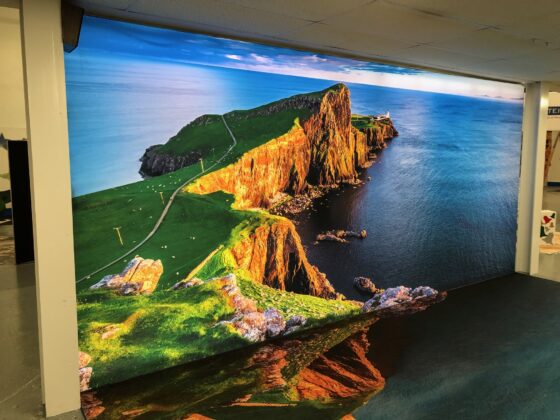
Backlit banner rolls are engineered to glow when lit from behind, so the print stays saturated inside a lightbox or illuminated frame. They use a translucent base and heavier ink loads to hold color when the light passes through.
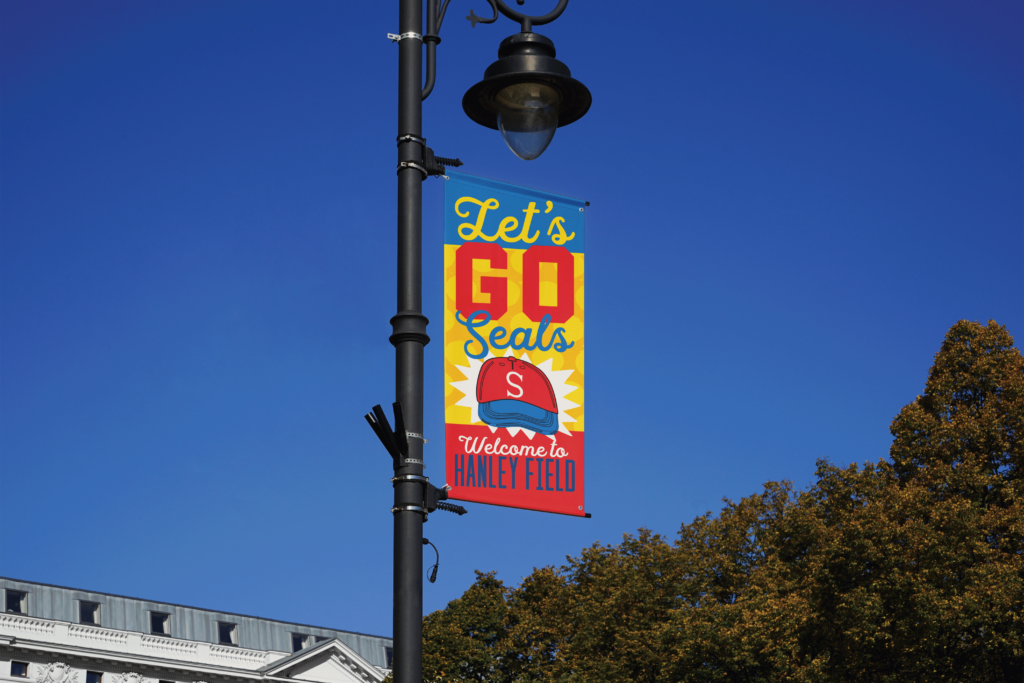
Blockout banner media carries an opaque center layer so two different prints on the same banner do not show through each other. That makes it the choice for double-sided street pole banners and hanging signs viewed from both sides. Ultraflex blockout rolls run from roughly 12 to 15 ounces, including DSS 12 oz, DSS Pro 14 oz, and DSS 15 oz constructions.
Mesh banner media is perforated so wind passes through instead of turning the banner into a sail. It is the standard for building wraps, stadium fencing, and any large banner exposed to gusts. Ultraflex mesh options such as UltraMesh Premium 100 and UltraMesh Premium 328 balance airflow against print coverage.
Which banner weight and construction do you need?
Common vinyl banner roll weights (oz per sq yd)
Source: Ultraflex product line; industry standards.
Banner weight, measured in ounces per square yard, is the single best predictor of how long a banner survives outdoors. Heavier material carries more scrim reinforcement and coating, so it resists tearing, curling, and UV fade for longer.
For most outdoor work, 13 oz scrim vinyl is the industry workhorse. It is stiff enough to hang flat, thin enough to ship cheaply, and durable enough for a season or two of exposure. When a banner needs to last longer, hang double-sided, or take grommets under load, shops step up to 15 oz and heavier constructions. Ultraflex blockout rolls, for example, span 12 to 15 ounces so a buyer can dial in exactly the opacity and toughness a job needs.
Weight is not the only spec that matters. Check roll width against your printer and your finished banner size, confirm the scrim count, and read the coating notes on the technical data sheets before you commit a run. Ordering one weight class too light is the most common and most avoidable banner failure.
What printers and inks work with vinyl banner rolls?
Ink chemistry, not just the material, decides whether a print survives outdoors. Vinyl banner rolls are formulated for specific ink systems, and printing the wrong ink on the wrong media causes adhesion failure, banding, or premature fade.
The four common systems are solvent, eco-solvent, latex, and UV. Solvent and eco-solvent inks bite into the vinyl for durable outdoor prints. Latex and UV inks cure differently and need media tuned for their heat and adhesion profiles. Running a certified media path removes the guesswork: Ultraflex publishes a full range of HP Latex certified media that has been validated for those printers, so color and durability are predictable out of the box. When in doubt, match the roll to your printer’s certified media list rather than assuming any banner vinyl will run.
Do vinyl banners need to be fire rated?
For most indoor public venues and many municipal codes, yes. Banner material used in tents, membrane structures, exhibition halls, and hanging displays is commonly tested under NFPA 701, the National Fire Protection Association’s Standard Methods of Fire Tests for Flame Propagation of Textiles and Films.
NFPA 701 does not certify a material as fireproof. It measures how a textile or film resists flame propagation after a controlled flame exposure, recording char length and any flaming residue. Convention centers, schools, and event venues frequently require documented NFPA 701 compliance before a banner can hang, and a failed inspection can pull a sign minutes before doors open. Ask for the paperwork up front. Ultraflex publishes downloadable fire certificates for its media so print providers can hand a venue proof of compliance instead of scrambling for it later.
Are there recycled or PVC-free banner rolls?
Yes, and they no longer force a quality tradeoff. As more brands adopt sustainability targets, banner suppliers have built recycled-content and PVC-alternative rolls that print and hang like conventional vinyl. Ultraflex offers EcoVantage and ReSource lines within its sustainable substrate range, including recycled-content frontlit, blockout, and mesh options.
For an agency or in-house team reporting on environmental commitments, specifying a recycled banner roll is a low-friction win. The finished banner looks the same to the audience, the print process is unchanged, and the material carries a story the brand can actually stand behind.
Why banner material still wins attention and budget
Printed out-of-home advertising is not a shrinking category, which is why the roll you print on still matters commercially. Out-of-home advertising revenue in the United States surpassed USD 9.1 billion in 2024, a 4.5% increase and the first time the medium crossed the USD 9 billion mark, according to the Out of Home Advertising Association of America. Banners are a core part of that spend.
The physical quality of a sign also shapes how buyers judge the business behind it. In a FedEx Office survey, 76% of American consumers said they would enter a store they had never visited before based on its signs, and 68% said they had bought a product or service because a sign caught their eye. The same research found that 52% were less willing to enter a store with poorly made signs, per FedEx Office. A crisp print on quality banner material is not a cosmetic detail. It is a signal about the brand.
How to buy vinyl banner rolls by the roll
Start with a physical sample. Color, hand feel, and how a material takes a grommet are hard to judge from a spec sheet, so request a sample of any roll before committing a large order. Confirm the roll width fits your printer and your finished sizes, and match the media to your ink system.
When you are ready to price a run, request a quote with your material, width, and quantity, or use the reseller locator to source through a local distributor. For anything unusual, from oversized widths to specialty constructions, contact the team and describe the job before you order. The extra ten minutes up front is far cheaper than a failed reprint.
Frequently Asked Questions
What weight vinyl banner should I use outdoors?
For most outdoor banners, 13 oz scrim vinyl is the standard choice, balancing durability, cost, and print quality. Step up to 15 oz or heavier when a banner must last multiple seasons, hang double-sided, or bear load on its grommets. Ultraflex blockout rolls span roughly 12 to 15 ounces to cover that range.
What is the difference between frontlit and blockout banner rolls?
Frontlit banner rolls are read by front-facing or ambient light and are the default for most single-sided signs. Blockout rolls add an opaque center layer that stops light and images from showing through, which makes them the right choice for double-sided banners and street pole signs viewed from both sides.
Do vinyl banner rolls work with latex printers?
Yes, as long as the roll is formulated for latex ink. Latex and UV inks cure differently from solvent inks, so use media validated for your printer. Ultraflex publishes a range of HP Latex certified media so color and durability are predictable rather than a gamble.
Are vinyl banners fire rated?
Many are, and many venues require it. Banner material is commonly tested under NFPA 701, which measures flame propagation for textiles and films. Convention centers and event venues often demand documented compliance, so request a fire certificate from your supplier before you print.
Can you get recycled banner material?
Yes. Recycled-content and PVC-free banner rolls, such as the Ultraflex EcoVantage and ReSource lines, print and hang like standard vinyl while supporting a brand’s sustainability goals. The audience sees the same finished banner, and the material carries a documented environmental story.